Friday, 21 October 2016

Ericsson first to deliver 5G NR radio

We are seeing a new era in communications at the moment, the move from tetra and RF to the mobile network. The uk’s emergency services will be moved over to EE’s ESN system slowly until 2020 using Motorola kit designed particularly for the technology. The natural evolution is 5G, which we won’t see for many years, but Ericsson have taken the baton and are running with it.


  • World's first commercial 5G New Radio (NR) radio for massive MIMO and Multi-user MIMO coming in 2017


  • New additions to Ericsson Radio System address key requirements of 5G, in today's networks


  • Pioneering Industrialized Network Rollout Services solution facilitates complete rollout from configuration to verification in a single visit


Ericsson (NASDAQ:ERIC) is commercializing the world's first 5G NR radio for massive MIMO, with the first deployments coming in 2017. Together with the Ericsson 5G Plug-Ins announced in June and Ericsson's already commercially available Radio System Baseband 5216, which currently powers Ericsson's award-winning Radio Test Bed, Ericsson is first to deliver all components of a 5G access network.

Tom Keathley, senior vice president, Wireless Network Architecture and Design, AT&T, says: "As we accelerate toward 5G, it's beneficial to have a flexible radio platform that can be deployed not only for LTE, but also versions of future 5G NR standards."

AIR 6468 combines advanced antennas with a large number of steerable ports to enable 5G technologies of beamforming, Massive MIMO and -- building on that -- Multi-user MIMO, initialized as MU-MIMO. These capabilities improve user experience while enhancing the capacity and coverage of the network and reducing interference. The new radio provides LTE support as well, so it is applicable in today's networks.


Huang Yuhong, Deputy Head, China Mobile Research Institute (CMRI), says: "Massive-MIMO, also known as 3D MIMO, is an important milestone in China Mobile's technology roadmap from 4G to 5G. We are very happy that Ericsson's new radio product is coming to market soon to meet our needs and enable us to integrate 5G technologies into our existing networks."

A host of new additions to the Ericsson Radio System are also coming that address key 5G requirements, in today's networks.

Daniel Staub, Head of Joint Mobile Group, Swisscom, says: "On the road to 5G, we will continue to invest in LTE advancements that will become part of our 5G networks. For us, it is key that Ericsson has chosen to focus on advances that will support us in this evolution. These enhancements will further improve the customer experience."

Additional new Ericsson Radio System gear addresses 5G concepts


  • Three new radios support Gigabit speeds for LTE and provide further flexibility in design: Radio 4407 and Radio 4412 enable 4x4 MIMO in one radio unit for FDD and TDD mode respectively, and Radio 8808 for advanced TDD beamforming applications


  • Addressing both the need for unlicensed spectrum options and the growing emphasis on small cells is the Radio 2205, a micro solution on unlicensed spectrum that is fully integrated in Ericsson Radio System, using the same baseband and network management


  • Two new baseband units support the growing need for densification: the outdoor micro Baseband 6502 and macro Baseband 6303 with Ericsson Rail System mounting for flexible site builds


  • Addressing interference issues in dense builds, Baseband P614 enables new band activation on challenging sites by mitigating Passive Inter Modulation, referred to as PIM mitigation, from static and dynamic sources both inside and outside the antenna system


  • Spectrum optimization is a growing need and Uplink Spectrum Analyzer is an Ericsson-unique software solution to remotely identify external interference without the need for costly measurement equipment and site visits


  • Exclusive to Ericsson is instant power sharing, used in the wideband Radio 2242. This capability allows power to be instantly shared between carriers, standards and bands, optimizing the use of radio resources


  • Cloud RAN will be an important 5G network architecture and Baseband C608 provides high-performance switching in Elastic RAN deployments


Peter Jarich, Vice President, Consumer and Infrastructure Services, Current Analysis, says: "Mobile operators, today, are clearly focused on the race to 5G commercialization, while also continuing to invest in their existing LTE networks. With a new 5G radio and LTE offerings which echo key 5G concepts - small cells, licensed-unlicensed band combinations, Cloud RAN, network densification, spectrum optimization - Ericsson's new portfolio additions and Ericsson Radio System innovations provide a compelling way forward."

To support new network builds, Ericsson has created the industry's first Industrialized Network Rollout Services solution. The Network Deployment Delivery Platform coupled with Ericsson's pioneering process facilitates the complete configuration, installation, integration, shakedown and handover of a fully verified site, ready in a single site visit.

Arun Bansal, Head of Business Unit Network Products, Ericsson, says: "Ericsson has driven innovation in every generation of mobile technology and now we are set to over-deliver on an aggressive promise. We are introducing the new hardware that 5G Plug-Ins, announced in June, will run on, so that the first operators can start to deploy 5G infrastructure.  And, we are also launching innovations that improve both the performance and efficiency of today's networks using concepts that will evolve into 5G."

We found this news story on the Communication news website

Monday, 19 September 2016

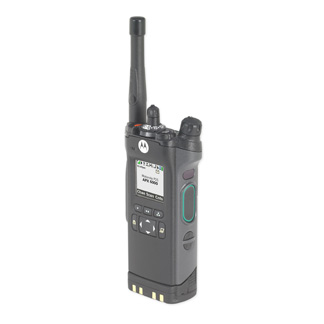
Motorola Solutions announces new mobile radio, enhancements to its P25 platform

Motorola Solutions are busy re-modelling their business at the moment and are under pressure from many other radio manufacturers, that are stealing away their market share. They are moving towards creating equipment that can use the LTE, essentially competing with the mobile phone market. This will be seen by many as a move away from the essence of two way radios, but it is an inevitable progression. This new radio will use current motorola earpieces, chargers and batteries. We brought you this article from the urgentcomms websites

Motorola Solutions today will unveil a new P25 mobile radio that operates on its ASTRO 25 systems and will highlight key features enabled by the 7.17 release of ASTRO 25 software today at APCO 2016.


One of the key features of the APX 8500 all-band mobile radio is its ability to leverage LTE connectivity from a VML750 modem installed in the public-safety vehicle, if the ASTRO 25 data capability is interrupted by continuous voice transmissions during a busy incident, according to Anatoly Delm, Motorola Solutions’ director of global infrastructure marketing.

“Let’s say that you have a major incident, everybody’s talking all the time and the ASTRO network is being used all the time, it can [offload] some of the data communications, like GPS, to broadbandâ€"public-safety LTE or commercial LTE, depending on what the modem is operating on,” Delm said during an interview with IWCE’s Urgent Communications.

“So, you’ve got this combination of the best of both worlds, where your voice communications are continuing over the ASTRO network, and your data communicationsâ€"if the ASTRO network is too busy, because of a major incidentâ€"can be carried on by an LTE network from the same car.”

Meanwhile, the 7.17 release of ASTRO 25 software will provide system users and operators with features that are designed to improve the reliability and usability of the P25 network, Delm said.

One enhancement is a more efficient way to execute over-the-air software updates, Delm said.

“Ordinarily, what happens is that the software update has to travel to one radio at a time. If you’ve got a large enough fleet, it could take days or possibly weeks [to complete the software update for all radios],” he said. “In this case, the software is being continuously broadcast, kind of like on repeat. In the meantime, all of the radios continue to function as normalâ€"you can talk on them, and none of the functions are disrupted.

“Once a radio has received all of the packets that it needs, it can then give the user the [a notification] that the update is ready and asks whether the user wants to install it. If they say ‘Yes,’ then the radio is updated. This means you can reduce your update time to maybe a few hours, depending on the size of your fleet. But you certainly don’t have to do it one at a time.”

Other new capabilities included in the latest ASTRO 25 software release include personnel accountabilityâ€"often used for roll-call functionality on a fireground or other incident sceneâ€"over trunked systems, Delm said. Previously, this capability existed only in conventional mode.

Sunday, 18 September 2016

Hytera to Supply Critical Communication Systems to EU delegations Worldwide

Hytera are truly making huge waves in the two way radio market and this acquisition on Motorolas home turf is remarkable. An insider has told us that this tender was won through a lot of hard work and attention to detail. Hytera are growing rapidly, we have heard from one source at EarpieceOnline.co.uk that their Hytera earpieces are out selling their Motorola equivalents this year.

The Professional Mobile Radio expert from Germany, Hytera Mobilfunk GmbH, is awarded with the tender to supply EU delegations worldwide with radio communication networks based on multiple technologies.

Hytera Mobilfunk GmbH confirms the successful conclusion of the negotiations with the European External Action Service (EEAS) over a framework contract for radio communication networks in EU delegations.

The contract is to run for the next four years and implies a supply of multiple critical communications systems, for local and long distance communications. Next to that, Hytera will also be responsible for the installation, updating, replacement, repair and maintenance of those networks. Additionally there will be a technical support for the EU delegations and headquarters of the EEAS.

Matthias Klausing, CEO of Hytera Mobilfunk in Germany “I´m proud and honoured by the trust the EEAS puts in us as a company. And I´m looking forward to a good and constructive cooperation.”

- See more at: http://www.tetra-applications.com/33031/news/hytera-to-supply-critical-communication-systems-to-eu-delegations-worldwide#sthash.I1P9dSt1.dpuf

Thursday, 21 July 2016

Farewell, Faithful Steed: Veteran Actor (and Sometime Fashion Icon) Patrick Macnee Dies, Aged 93

Patrick Macnee, the actor best known for his work on TVs The Avengers has passed away. He was 93 years old.

Macnee was born in London, England in 1922. His father trained racehorses and was noted for his keen fashion sense, whilst his mother was a niece of the Earl of Huntingdon (which may even have made Patrick a descendent of Robin Hood!). However, such privileged beginnings proved to be only deceptively comfortable for the young Macnee, who saw his father drink and gamble away the family fortune, before leaving the country for India, while Macnee lived with his mother and her Lesbian lover Uncle Evelyn Spottswood. The pair attempted to dress the young boy up as a girl, but settled for a kilt instead, which was how Macnee was dressed every day until he was eleven years old.

Spottswood paid for Macnees schooling, which included boarding school from the age of five, a preparatory school (where he acted alongside a young Christopher Lee in a production of Shakespeares Henry V) and ultimately a spell at Eton, where he joined the schools dramatic society. Eventually however, Macnee was quietly expelled from the school after he instigated a gambling ring and was then caught selling erotic photography and whiskey to his fellow pupils.

By this time though, he had already been bitten by the acting bug and so decided to pursue a career in the performing arts.

Before he could make his West End debut, the young actor was called up for National Service. It was 1942 and World War 2 was in full swing. He began his military career in the Navy as an ordinary seaman, before progressing to sub-lieutenant. Fortunately, a nasty bout of bronchitis caused Macnee to miss the D-Day landings, where the ship he was serving aboard was destroyed and the entire crew killed. He was ashamed of not being present at the battle for the rest of his life. Macnee was demobilized in 1946 with the final rank of lieutenant.

Patrick Macnee learned his craft via a number of small roles, appearing in The Life and Death of colonel Blimp in 1943 and portraying a Spear Carrier in Lawrence Oliviers 1948 production of Hamlet (alongside an uncredited Christopher Lee), amongst other assorted roles. However, as the years passed and his big break failed to arrive, Macnee became depressed and frustrated by his lack of progress.

various spy gadgets as the series went on.

It was Steeds debonair, quintessentially British wardrobe that helped the show to become so successful both at home and overseas. In fact, the clothes were so iconic that in France The Avengers is known as Chapeau Melon et Bottes de Cuir â€" Bowler Hat and Leather Boots.

Macnee also decided early on that Steed should never carry a gun. In later interviews he stated that he was sick of firearms after experiencing “a war in which Id seen most of my friends blown to pieces”.

Besides, a pimped-out brolly is waaaaay cooler.

In 1965, Steed was paired with his most iconic partner (and best, but Im biased since she was my childhood crush) Mrs. Emma Peel. Portrayed by Diana Rigg, Mrs. Peel (designed to have man appeal â€" hence the name) was smart, self-assured and supremely confident. In a unique twist, Peel often acted as Steeds muscle, being by far the more physical of the two characters. Although he frequently rescued her from harm, their relationship was truly a partnership of equals, making Mrs. Peel, secret agent, martial artist and chemistry genius, a genuine pioneer among female heroines. Macnee was always proud of the strong, positive female characters that were so prominently featured in The Avengers.

Rigg left the series in 1968 and promptly followed her predecessor into the James Bond franchise, while Macnee was partnered with Linda Thorsons Tara King until the series demise a year later in 1969.

ITV revived the Avengers concept in 1976 and Macnee starred alongside Joanna Lumley (Purdy) and Gareth Hunt (Gambit). The show ran for two series, but, despite a positive reception, was scrapped in 1977 due to financial problems.

Away from The Avengers, Macnee appeared in the James Bond film A View to a Kill (1985) and the classic Rock n Roll mocumentary This Is Spinal Tap (1984), where he portrayed Sir Dennis Eton-Hogg, the somewhat sanctimonious president of Taps record company. He also played Dr. George Waggner in 1981s cult favourite The Howling.

In 1998, Hollywood made a disastrous attempt to revive The Avengers. The movie starred Ralph Fiennes, Uma Thurman and Sean Connery and Patrick leant his support in the form of a voice cameo. However, without the twinkle, wit and class of the original John Steed, the idea was doomed to failure.

Finding himself in the enviable position of being a pop culture icon, Macnee was asked to appear in music videos for The Pretenders and Oasis amongst others. He also contributed vocals to a novelty single Kinky Boots with Honor Blackman that was issued three times, the first in 1964, the second in 1983 and the third in 1990, where it eventually became a top 3 hit.

As a television actor, Macnee appeared in such memorable shows as The Twilight Zone, Rawhide, Colombo, Frasier, Battlestar Galactica, Murder, She Wrote, The Love Boat, Magnum P.I, Diagnosis Murder, The Littlest Hobo, Alfred Hitchcock Presents and many others. He even played Dr. Watson alongside Christopher Lees Sherlock Holmes.

In later life, Macnee became a nudist. After an infancy spent in a dress, a childhood in a kilt and an adulthood in the finest suits money can buy, why not spend an old age in the nip? For a style icon that brought the suave and stylish John Steed to life with effortless grace, charm and virility, one supposes that it must have felt like the next logical step.

R.I.P Patrick, you will be sorely missed.

Monday, 6 June 2016

Scientists Astounded as Four Legged Fossil Snake Turns up In Museum

A unique species of early cretaceous snake â€" unique in that it apparently had four functioning limbs â€" has been discovered in the Bürgermeister Müller Museum in Solnhofen, Germany this month.

The discovery was made by Dr. David Martill of the University of Portsmouth, who was showing a group of students through the museum’s collection when he noticed the specimen’s remarkable attributes.

The snake, which measured about 15 centimetres from nose to tail, is thought to have been a carnivore (a fact borne out by the bones of smaller animals preserved in its stomach) and probably hunted via constriction, like many of today’s snakes. Experts believe that it may even have used its limbs to aid in the process.

Built for burrowing (an activity which likely would not have included its limbs in any significant way), this new discovery lends credence to the scientists who argue for snake evolution occurring on land, as opposed to in the sea.

Fossil snakes with stunted hind limbs are known to palaeontologists â€" and even today’s boas and pythons have a small pair of spurs where their hind limbs are thought to have once been. However, no snake, extinct or extant, has ever been discovered with four limbs.

Appropriately enough, Dr. Martill named the creature Tetrapodophis, meaning ‘four-legged snake’.


However, some experts are not convinced. In our vibrant, ecologically diverse world, there are a great many species of legless lizards that are not true snakes. European slow worms, for example, are snake-like in aspect, but they are lizards, not snakes. Another example would be the Mexican Bipedidae family, which are serpentine in appearance, but which retain a pair of fully functioning forelimbs.

“Is it even a snake? I honestly don’t think so,” said the University of Alberta’s Dr. Michael Caldwell, an expert in snake evolution, to National Geographic.com’s Ed Yong. According to Caldwell and a growing number of other critics, Tetrapodophis lacks certain distinctive features in the spine and the skull that would label it a snake. The fact that this is the only known specimen in the world and that the skull is only partially preserved will probably see the debate continue until such time as a complete specimen is unearthed.

But Dr. Martill is insistent that his discovery is a snake. Speaking to National Geographic, he pointed out the specimen’s backwards-pointing teeth, single row of belly scales, the connections between the vertebrae and the shortness of the animal’s tail after the hip â€" all of which suggest snake to the educated observer. Of course, many legless lizards also feature these traits, but none has all of them. This means that even if the animal has been mis-identified, it is still totally unique to science.

Even more mysterious are the origins of the fossil itself, which contains the rather distinctive characteristics indicative of the Crato formation in Brazil. Discounting for a second that this is quite possibly the earliest fossil snake known to have emerged from South America, question marks have been raised regarding how the specimen could have made it to Germany when the trade of such artefacts is illegal under Brazilian law.

Since 1942, it has been illegal for any unlicensed person to dig for fossils in Brazil without first gaining permission from the Brazilian National Department of Mineral Production (DNPM). Last year, a number of people were prosecuted (where they faced a maximum sentence of 20 years in prison) for the illegal export of Brazilian fossils to museums in Germany and Great Britain. Odds are that Brazilian authorities, as well as the scientific community in general, will be looking into the origins of such an important find with great interest.

Saturday, 14 May 2016

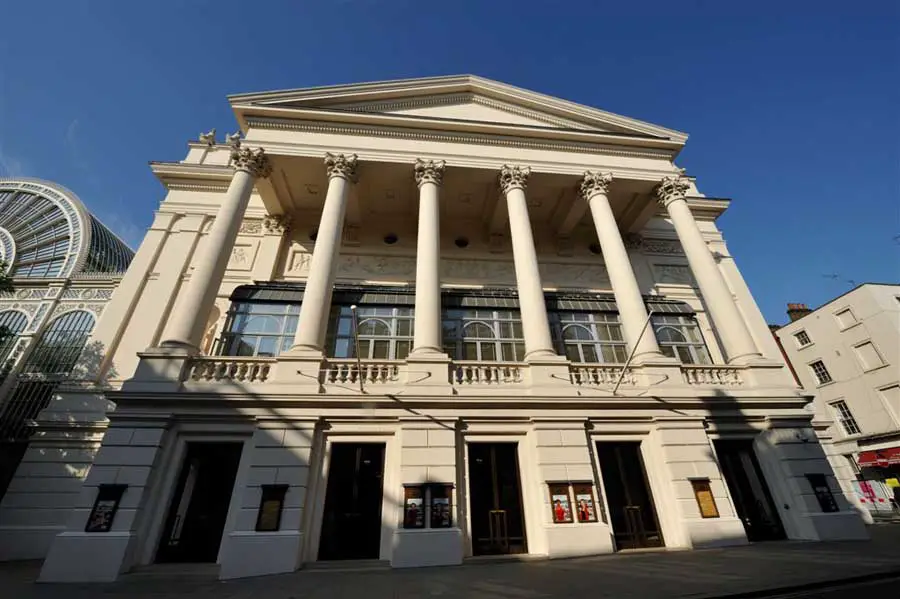
Musician sues Royal Opera House over ruined hearing

It is quite a common thing that musicians and artists that are exposed to loud noise, will eventually suffer from hearing damage. We have seen many artists suffer from this career threatening damage, the likes of Phil Collins, Eric Clapton and Ozzy Osbourne and the tinnitus that is effecting Chris Martin from Coldplay, this is a problem that many more will be affected by. This article from the BBC talks about Chris Goldscheider and his pursuit of damages over his hearing damage. Rightly or wrongly it’s an interesting tale.

A renowned viola player is suing the Royal Opera House for ruining his hearing and his career during rehearsals of Wagner’s Die Walkure.

Chris Goldscheider claims his hearing was irreversibly damaged by brass instruments put immediately behind him.

The Musicians’ Union says hearing damage is a major problem for musicians playing in orchestras.

The Royal Opera House denies it is responsible, but around a quarter of its players suffer hearing illnesses.

In court documents seen by the BBC, Goldscheider claims that in 2012 his hearing was "irreversibly damaged" during rehearsals of Richard Wagner’s thunderous Die Walkure "from brass instruments placed immediately behind him" in the famous "pit" at the Royal Opera House.

The sound peaked at around 137 decibels, which is roughly the sound of a jet engine. The court documents say the noise "created an immediate and permanent traumatic threshold shift".

Image captionChris Goldscheider played the viola with some of the world’s greatest orchestras

Goldscheider says this amounts to "acoustic shock", one effect of which is that the brain hugely amplifies ordinary sounds.


Music has been in most of Goldscheider’s life: "For the last quarter of a century I’ve been a professional musician. Music was my income. It was my everything," he says.

The son of a composer, from the age of 10 he spent in excess of six hours a day practising and rehearsing. He played the viola with the Royal Liverpool Philharmonic and BBC Symphony orchestras, before joining the prestigious Royal Opera House orchestra in 2002.

Career highlights have included performing live with the famous Three Tenors to 100,000 people at the Barcelona Camp Nou football stadium, and with Kylie Minogue on MTV. He has also recorded with artists including the band 10cc.

Goldscheider says the effects of the hearing damage have been devastating.

"Ordinary sounds like banging cups and glasses together is a very painful noise," he says.

"My newborn daughter last year was crying so much I actually got noise-induced vertigo because of my injury and I ended up in bed for three weeks."

The musician says he has lost the career he loved and his mental health has deteriorated as he struggles to cope with the impact and effects of his hearing problems.

Life has changed dramatically. To carry out ordinary every day tasks such as preparing food, Chris has to wear ear protectors. Especially upsetting is that he had been unable to listen to his 18-year-old son Ben - one of the country’s outstanding young French horn players.

"Ben is a fantastic musician. I haven’t been able to listen to him play or practice since my injury. I’ve missed him playing concerts and winning competitions. I can’t even bear him practising in an upstairs room when I am downstairs in the house," he says.

musician has to wear ear protectors to carry out every day tasks

At the time of his injury, Goldscheider was provided with hearing protection capable of reducing the noise by up to 28 decibels, but his lawyers claim this was insufficient. They say he was not given enough training in how to use it and protect himself, and that the noise levels should not have been so dangerously high.

The Royal Opera House does not accept the rehearsal noise caused Goldscheider’s injury, and denies that is responsible.

In a statement it told the BBC: "Mr Goldscheider’s compensation claim against the Royal Opera House is a complex medico-legal issue, which has been going on for some time and is still under investigation.

"All sides are keen to reach a resolution. The matter is now the subject of legal proceedings, and in the circumstances it wouldn’t be appropriate to comment any further at this stage."

And according to Goldscheider’s solicitor Chris Fry, part of the Royal Opera House’s defence breaks new legal ground.

"Essentially what is being said is that the beautiful artistic output justifies damaging the hearing of the musicians performing it," he says.

"That’s never been tested by the courts. We don’t think the court is likely to uphold that, in particular where it’s clear steps could be taken to maintain the beautiful sound and protect hearing at the same time."

he Royal Opera House denies it is responsible for Chris Goldscheider’s hearing issue

Hearing damage suffered by rock musicians is well documented. Years ago The Who’s Pete Townsend went public about his hearing loss and famously said a doctor had told him: "You’re not actually going deaf, but I’d advise you to learn to lip read."

Brian Johnson of AC/DC and Ozzy Osborne have also been affected. But what is far less well known is that it is a significant problem in the more sedate and sophisticated world of classical music.


There are around 100 players in the orchestra at the Royal Opera House. The BBC has learnt more than a quarter report occasional or mild hearing illness, and that in the 2013/14 season, there were seven cases of sickness absence related to noise problems and a total of 117 weeks of sick leave taken. That’s not music to anyone’s ears.

Morris Stemp of the Musicians Union says there are many reasons for the hearing damage suffered by classical musicians.

"Conductors are allowed to ride roughshod over health and safety considerations," he says. "They put players on the stage where they will be in harm’s way. And instruments are now louder than they ever were before because of the materials they are now made from."

Add to that the increased number of live concerts prompted in part by the drop in income from CD sales, and there is a mix of elements that can put the hearing of orchestra players at serious risk.

Chris Goldscheider’s case casts light on a little known or discussed problem, and will be watched closely by all those in the classical music world.


Sunday, 27 March 2016

World Radio Day focuses on role of radio in disaster management

World Radio Day on 13 February brings attention to the role of radio in managing disasters and recovery in their aftermath.


Radio is recognized as a low-cost medium, specifically suited to reach remote communities and is especially effective in reaching people affected by disasters when other means of communication are disrupted. Terrestrial radio broadcasts are effective in providing timely, relevant and practical information to people who are confused and demoralised by the impact of a crisis. Broadcast information is particularly useful in situations where physical access is difficult and aid responders may take several days or weeks to reach affected communities.

Recent natural and man-made disasters are a major cause for concern to the global community. “In times of crisis and emergency, radio can be a lifeline,” said United Nations Secretary-General Ban Ki-moon. “For people in shattered societies, or caught in catastrophe, or desperately seeking news, radio brings lifesaving information. This year, as we start carrying out the Sustainable Development Goals, let us resolve to use radio for human progress. On this World Radio Day, let us resolve to prove that radio saves lives.”

“Radiocommunication is indispensable in saving lives in the event of a natural disaster,” said ITU Secretary-General Houlin Zhao. “Collaborating and sharing experiences is critical in order to support national and regional preparedness, and ITU is deeply committed to facilitating rapid and effective response in emergencies.”

“Amidst the ruins and in the face of an emergency, the radio is often the first medium for survival,” says Irina Bokova, Director-General of UNESCO. “Its durability is an incomparable advantage, often enabling it to resist shocks and re-transmit messages of protection and prevention to as many people as possible, better and faster than other media, saving lives.”

New developments in radio technology and in the transmission and delivery of radio content, especially through mobile devices and through on-demand media platforms, further extend the means to engage disaster-affected communities. These digital innovations are increasingly important in delivering effective disaster preparedness and prevention, while reinforcing the importance of community radio services.

ITU has developed a number of standards for effective emergency radiocommunications, recognizing that direct communication via radio helps reduce the sense of isolation and helplessness experienced by crisis-affected communities. Recommendation ITU-R BT.1774-2 is the standard that relates to emergency warning systems for analogue broadcasting, which facilitates the use of satellite and terrestrial broadcast infrastructures for public warning, disaster mitigation and relief.

In addition, the 2015 ITU World Radiocommunication Conference (WRC-15) identified spectrum to facilitate mobile broadband communications for robust and reliable mission-critical emergency services in public protection and disaster relief (PPDR), such as police, fire, ambulances and disaster response teams. WRC-15 also reinforced protection to search and rescue beacons to uplink to satellites, such as the Cospas-Sarsat system, which has assisted in rescuing over 37,000 people worldwide since December 2013.


World Radio Day marks the anniversary of the first broadcast by UN Radio in 1946, when it transmitted its first call sign: “This is the United Nations calling the peoples of the world.” Ever since, UN Radio broadcasts have highlighted the principles of the United Nations to foster world peace and development. World Radio Day seeks to raise awareness about the importance of radio, facilitate access to information through radio, and enhance networking among broadcasters.

- See more at: http://www.tetra-applications.com/32088/news/world-radio-day-focuses-on-role-of-radio-in-disaster-management#sthash.WRnylSLy.dpuf