Friday, 21 July 2017

Easy Bread Pudding Recipe - Strawberries And Cream Bread Pudding Recipe


I love throwing an annual Christmas party for friends and family. Over the years though I have realize there is no reason to make everything from scratch. I have a few simple recipes that happen to be from scratch. For the most part a lot of my Christmas party recipes are semi pre made at the grocery store. This is a great way to save time, but still look like you went to a lot of effort.

Naturally no meal is complete without having dessert. Do not be concerned, there are numerous slow cooker meatballs in the crockpot recipes for desserts. You are going to have to save room for desserts including Bananas Foster, Pumpkin-Cranberry Custard or especially for Homestyle Apple Brown Betty. You will discover great tasting treats to help you finish off just about any meal.

The following week, I was in a loca l supermarket. They had some gorgeous looking peppers (3 to a package - 1 each of red, green and yellow). 3 packages cost $8. Ground beef, rice, rolls, butter, salad fixings and dressing came to another $14. They had wine on sale and swedish meatballs bottles totalled another The total bill, including tax, was under $30.

A few sips told me this is a rough-tasting wine. You know it's there and won't want to pair it with a poached white fish with herbs. I first tried this Shiraz with a slow cooker meatballs-cooked beef stew and soft wheat kernels, accompanied by a commercial potato salad and a homemade tomato and cucumber salad. The wine was mouth filling and fairly long, but not subtle or complex. I tasted plums and black cherries. Not surprisingly this wine had no problem handling harissa, a very spicy Tunisian pepper sauce.

While wonderful for that snack, it makes a great entree as well. Slaw, potato salad, lettuce salad and chips, all make great sides to this wonder ful treat.

Dim sum is always served with a sweet hoisin sauce and a chili sauce and always with tea. Here at Phoenix you are served Jasmine tea. Dim sum at Phoenix is an adventure for your taste buds. You get a mix of sweet swedish meatballs baked tangy to salty and spicy from soft to chewy and gooey to crunchy. If its your first time trying dim sum it might be a little intimidating, but Phoenix has much to offer. The price is good and there's plenty to choose from. So sit tight and enjoy!!!

Wednesday, 17 May 2017

£4 billion emergency radio system ‘not yet proven’

We have been very vocal against the new ESN network, Tetra is proven and works very well, the benefits to moving over to a 4G network are attractive, but will it stand-up to a major incident? Will the network be robust enough when there are thousands of communications in a located area? These concerns have now been picked up by a commons committee, read more below….

An inquiry has revealed deep concerns about the coverage and contracting of a new £4 billion national emergency radio system.

A Commons’ Public Accounts Committee report released this month criticised the Home Office for its handling of the proposed the Emergency Services Network, or ESN.

Plans to deploy the “not yet proven” emergency radio system by December 2019 “would not be m et”, the committee said. The committee also criticised the Home Office for mishandling contracts talks for ESN and failing to plan for delays, that could cost nearly £500 million alone.

“Good communications can make the difference between life and death for both emergency services personnel and the public but the technology ESN will rely on is not yet proven.”

Across the UK, 105 ambulance, fire and police services are expected to switch from their existing Airwave Solutions radio system to ESN by December 2019.

Unlike the ageing Airwave network, ESN will operate on an existing retail 4G network rather than a dedicated emergency radio network.

However, the committee said forcing emergency services to share a network with the public had not been attempted at scale.


The appr oach relied on much improved network coverage across the UK, including on the London Underground, and new technology to prioritise emergency services over other network users.

“Bringing together all the different elements to form an end-to-end system and scaling up these solutions and testing them adequately will be very challenging.”

The government is expected to spend £1.2 billion developing ESN, £1.4 billion running down Airwave, and further £2.6 billion operating ESN until 2032.

The contract with Airwaves, which was bought by Motorola last year, expires in December 2019. The committee said extending this contract, which will almost certainly be necessary given expected delays, will cost an additional £475 million a year.

In 2015, Motorola and EE won the user services and networks contracts respectively for ESN.

The committee also criticised the Home Office for not maintaining “competitive pressure” while awarding the contracts and leaving the winning bidders in a “very strong position” when the contract comes up for renewal in 2023.

The committee recommended the Home Officer test the new network coverage rigorously, improve its tendering, budget and plan for an Airwave contract extension and reassess its timeline for switching to the new system.

“It must take responsibility for convincing services to switch to ESN but also be clear at what point it will mandate the switchover.”

The Home Office was told to report back to the committee by September this year.

Sunday, 14 May 2017

Growth of Global Hearing Amplifiers Market Driven by Increase in the Number of Prevalence of Hearing Impairment Patients in Old and Young Population

We found this article and couldn’t not post this to our blog, it shows how hearing damage is on the upsurge. With cases of hearing loss growing every year, hearing amplifiers and hearing aids sales have consistently increased. There doesn’t seems to be an answer to this rise but as technology improves, answers can come that way.

Hearing loss can occurs when inner ear or nerve is damaged, which may be caused due to diseases, aging, loud noise, and medications. Hearing amplifier is a small part of hearing aid which makes the sound louder. Hearing amplifiers increase the power of signals and then send them to the ear through speakers.

Hearing aid is useful in improving the hearing and speech of patients. An otolaryngologist investigates the cause of the hearin g loss. An audiologist is a hearing health professional who identifies and measures hearing loss and will perform a hearing test to assess the type and degree of hearing loss.

Increase in number of hearing impairment cases coupled with rising costs of hearing aids are expected to drive the growth of the global hearing amplifiers market during the forecast period. Majority of the consumers use hearing amplifiers or personal sound amplification products (PSAPs) as they are considered cheaper alternatives of hearing aids. Hearing amplifiers or PSAPs, are designed to amplify sounds in any recreational environment and are exempt from the Food and Drug Administration (FDA). Hearing amplifiers are sold directly to consumers as electronic devices without the requirement of a physician prescription.

According to National Institute on Deafness and other Communication Disorders (NIDCD), approximately 324,200 cochlear implants have been implanted worldwide. About 15 percent of A mericans (26 million people) between the ages of 20 and 69 have high frequency hearing loss due to exposure to noise at work or during leisure activities. Major driving factors for the growth of the global hearing amplifiers such as an increase in the number of prevalence of hearing impairment patients in old and young population, increasing investment in research and development in ENT field among others.

Based on styles or design types of hearing aid products the global market of hearing amplifiers can be segmented as follows:

-Behind-the-ear (BTE)

-Mini BTE

-In-the-ear (ITE)

-In-the-canal (ITC)

Based on function the global hearing amplifiers market can be segmented as follows:

-Analog hearing aids

-Digital hearing aids

Based on distribution channels the global hearing amplifiers market can be segmented as follows:

-Hospital Pharmacies

-Online Pharmacies

-Independent Pharmacies and Drug stores

Hearing amplifiers market is segmented into five major regions: North America, Europe, Latin America, Asia Pacific, and Middle East & Africa. In 2015, North America lead the global market of hearing amplifiers followed by the Europe in terms of revenue. According to statistics compiled by the National Institute on Deafness and Other Communication Disorders (NIDCD), 37.5 million adults aged 18 and older in America report some form of hearing loss.

According to the National Institute on Deafness and Other Communication Disorders (NIDCD), 28.8 million U.S. adults could benefit from using hearing aids and more than 90 percent of deaf children are born to parents suffering from some kind of hearing disorder. Globally, the hearing amplifiers market is expected to witness a healthy CAGR in terms of revenue during the forecast period.

Latin America, Middle East & Africa and Asia Pacific regions are the emerging markets in the global hearing amplifiers market. Increasing awareness among the various distribution channels as well as consumers in these regions is anticipated to propel global market growth of hearing aids and amplifiers during the forecast period.

The key players in the global market develop hearing amplifiers in analog and digital forms. Some of the top companies in the global hearing amplifiers market are Sound Hawk, Resound, Foshan Vohom Technology Co. Ltd., Sound world solution, Shenzhen LA Lighting Company Limited, Austar Hearing Science and Technology (Xiamen) Co., Ltd., Huizhou Jinghao Electronics Co. Ltd., Ziphearing among others.

Why Wired Radio Earpieces Will Not Be Going Away Any Time Soon

Advancement in technology has changed the form of how electronic devices look like, how they operate and consequently how we handle them. Devices such as radios have become smaller, lighter and wireless. The advent of Bluetooth has enabled radios to connect without any physical connections; notably saving us from the fuss of tangled and visible wires. The wireless earpieces are in use, but it is important to note that they have not completely taken over from the wired covert earpieces. With the convenience and technological advancement they offer, why is it that they have not replaced their wired counterparts especially in fields of operation? Here are a few thoughts:

Reliability

Wireless earpieces are not as reliable as the wired ones. The technology that supports Bluetooth communication has it that the source device (radio) and the receiving device (earpiece) have to be at a certain distance from each other and nothing should come in between the path of transmission of the two devices. This means that if any of the two requirements are not as anticipated, functionality is compromised. Wired earpieces do not have the complication of interference and limited bandwidth. When you are in a situation where reliability is crucial, where you cannot afford to lose connection, say you are out in the field on operation, it would make sense to use wired security earpieces as they are easy to handle, making them more reliable.

Limited Operational Lifetime

For a wireless device to be operational, it needs to be charged. When out on assignment, the crew will need to ensure that they have fully charged the wireless earphones and carried a fully-charged extra battery. The batteries work on a limited operational lifetime which burdens the crew as they have to keep replacing the batteries every time. When pa cking batteries for replacement, one should pack enough to cater for both the radio and earphone. This is not the case with the wired pieces. For wired pieces, the crew only has to worry about a single cable that will connect the radio to the earphones. The wired option is therefore less of a burden to handle than the wireless ones.


Necessary Visibility

In some instances, the visibility of the wires, which the wireless earpieces work against, is crucial in making a statement. In a security situation, the wired pieces are visible to the human eye; they make the public aware of the security. The visibility in itself reinforces security, deterring any harmful or criminal practices that may take place. In such a situation, wireless pieces are of no use as no security statement will be mad e.

Disruption and Negative Interference

Wireless earpieces are vulnerable to signal disruption and negative interference. It is possible for a wireless-transmitted signal to be compromised- an activity that may cause threats and anomalies. A signal transmitted by wireless means may be decrypted and accessed by unauthorized people. At the same time, the signal may be compromised in a way the end product that is received as sound is not what was initially transmitted. Bluetooth is open to any form of interference, be it purposeful or accidental. The wired radio earpiece on the other hand greatly reduce the possibility of such malpractices as it would be hard to physically interfere with transmission without anyone noticing.

Misplacing earpieces during an incident

In the event of an incident, it would be hard to misplace a wired covert earpiece. This is because, when an agent is on the move or if they make any vigorous movements, the radio earpiece might be detached from the ear but will not fall; it is tethered to the radio using the wire. On the other hand, a Bluetooth earpiece would probably detach itself from the ear, fall down and be misplaced as it has no physical tethering to the radio device. This will cost an agent a lot of time in looking for a misplaced device and even the responsibility of a lost device.

When it comes to technology, the feature advancements are normally made to our convenience and efficiency but in some cases, the old way of doing things would prove to be better. Wired security earpieces have major advantages over their wireless counterparts, making them hard to phase out. What the wireless earpieces can function as at this point is as a complimentary device to the wired one.

Thursday, 13 April 2017

Sepura Contributes to Success of World’s First Cross-border TETRA System

We take it for granted that when we move around the country our mobile phones connect to the nearest mast, or we go abroad and our phones automatically connect to the network, with tetra, this is not as easy, but this article is about a test that Sepura completed connecting two TETRA networks in Norway and Sweden, interesting stuff.

Sepura radios have successfully participated in interoperability trials for the world’s first cross-border TETRA communication system, linking RAKEL and Nødnett, Sweden and Norway’s public safety networks.

More than 350 first responders were involved in the trials, which took place in Meråker, close to the Swedish border, in a crisis response exercise involving public safety users from both countries.

The cross-border system utilises TETRA Inter-System Interface (ISI) functionality to connect networks together, effectively allowing users to roam to another network. This allows first responders to use their radios in both countries â€" vital for smooth collaboration in emergency situations.

The initiative to strengthen co-operation between national emergency services started in 2013 with the EU-funded Inter-System Interoperability project, designed to improve the ability to respond to natural disasters and security threats. The RAKEL and Nødnett networks are scheduled to be ready for bi-national operational use in early 2017.


Sepura’s STP9000 hand-portable radios and SRG3900 mobile radios were used by both Swedish and Norwegian emergency services during the exercise, although all Sepura radios â€" including the new flagship SC20 range â€" meet the technical requirements of the ISI system.

“This is one of the most advanced multinational radio communication projects in Europe,” said Tariq Haque, Product Manager for Sepura.

“After two years’ development, bi-national i nteroperability has become a reality, bringing cross-border mission critical communications to Sweden and Norway.

“We are extremely pleased to have played a part in this ground-breaking event.”

Source - http://www.tetra-applications.com/33643/news/sepura-contributes-to-success-of-world-s-first-cross-border-tetra-system

Thursday, 30 March 2017

How To Take Care Of Your Two Way Radio

Buying two way radio equipment is a very beneficial investment, but in order for you to get the most out of your money you should ensure that the equipment is well cared for. If you use and maintain your two way radios with proper care, they will function at their optimum capacity and you can expect them to last for many years. While no two way radio can last forever, there are some simple practices which can help extend the life expectancy of your two way radios and ensure they function at their very best. In this article, we are going to take a look at some of the top care tips for your two way radios;


Storage

You should always store your radio(s) correctly so as to keep it in a tip top condition. The ideal environment for storing your radio involves a cool a nd dry (ideally at room temperature, which should be about 72 degrees Fahrenheit) with limited exposure to the extreme weather conditions like excessive cold or heat, and such other elements of water and sunlight. Excessive temperatures can easily damage the batteries; the moisture may end up corroding the batteries. Also, when storing your 2 way radio, you should make sure that it's turned off and batteries are removed.

Charging Your two way Radio

First of all, you should know that 2 way radios are usually slightly different, so you need to familiarize yourself with the specific charging instructions of your radio. That being so, it is important to note that nearly all of the manufacturers will advise that you to turn off your radio while it’s charging. If you do not, your radio will be drawing current and also charging at the same time, and this can end up shortening the lifespan of the battery.

Overcharging your radio batteries can also cause numerous problems and will have a negative impact on its' overall battery life, so you should make sure that when it's charged fully you unplug its' charger; do not leave it charging all through the night if its' likely to remain fully charged for a long period of time while its' still being charged. When you buy new batteries its' the only time you can leave the radio charging overnight before you start using them for the 1st time; it'll help you get the maximum battery capacity.

Day to Day Use

Every two way radios user should be very mindful of their daily use. Although there are some 2 way radios which are designed to be quite robust, like the explosion proof and waterproof radios, they should still be treated with great care, always. Even if you have a waterproof or explosion proof radio, do not subject it to extreme temperatures.

You shoul d also avoid grabbing your two way radio by its' antenna, as this will eventually have a negative impact on your radio's reception and transmission quality. In addition, you should also avoid drops so as to maximize the long term functionality of your radio; consider using 2 way radio belt clips so as to reduce the chances of your radio getting dropped and subsequently getting damaged. Protecting the exterior of your radio helps protect its' interior, thus minimizing the repairs and the replacing of the equipment.

Another important tip to note when it comes to the day to day use of 2 way radios, is you should never expose your radio to any solvents (unless it has been designed to be used in the harsh conditions); this includes any cleaning fluids and alcohol. Also, try and stick with the accessories which are designed specifically for your particular type of radio; this is especially important when it comes to your radio battery, charger and adapter. Using an incompatible ac cessory can end up shortening your radio's lifespan and can even destroy it.

Cleaning Your 2 way Radio

You should regularly clean your radio to keep it in good working condition. The most effective and efficient way of cleaning your two way radio also happens to be one of the easiest ways as well; strong chemicals or intensive cleaning isn’t necessary. The only supplies you'll need include some water and a microfiber cloth. The microfiber cloth will effectively wipe away the smudges and dirt without causing any damage to your radio. As for the more stubborn marks and stains, you can use a damp cloth and then wipe until the radio is clean. Remember, never immerse your two way radio in water to clean it.

Conclusion

2 way radios are among the most versatile and toughest communication solutions, often lasting for many years before needing any repairs or replacement. However, in order to extend the lifespan of your 2 way radio even further, it is best to employ the above tips for 2 way radio care to fully secure your investment. Protecting your 2 way radio will not only increase its' longevity, but it also ensures that you will always have reliable communications. Well, as you can see above, taking care of two way radio is relatively easy, and the amount of maintenance required is minimal. A simple cleaning now and then, proper handling, maintenance and storage is all you need in order to extend the lifespan of your two way radio and keep it in a great working condition.

Sunday, 5 March 2017

What Is The Best Way To Select The Right Radio Earpiece

When choosing a radio earpiece, there are several factors that should be considered. A radio earpiece should not only aid in communication it should also protect the user’s ear against cumulative ear damage that may eventually result in ear loss. Below are the factors that you should consider when buying a radio earpiece;

1) Clarity of communication

The most important reason as to why you have a radio is for clear communication and this is what your radio earpiece should enhance. Although there are several radio earpieces out there, many of them use bone conduction when transmitting the user’s speech meaning that they heavily rely on vibrations of one’s skull as they talk. This does not help much in ensuring that the communications are clear especially when one is on the move.

You should therefore go for a system whose in-ear microphone does not use bone conduction and this will enhance the soun d clarity. Such a system can even transmit speeches when one is whispering and this comes in handy especially when in an environment where secrecy is very crucial.

2) Comfort

It is very important to select a system that you feel comfortable with most importantly when you are to wear it on your head. Note that, you will probably be wearing the gear for long hours and that is why it should be of lightweight and should not in any way interfere with your eye wear or helmet.

Avoid heavy, sweaty and coiled tube earpieces that are very uncomfortable and will cause ear fatigue. Instead, go for a radio earpiece whose microphone is built into the earbud itself. Such earpieces come in various shapes and sizes and can even be customized to fit the specific needs of a user. Note that, military-grade materials are specifically designed to be of lightweight.


3) Durability

Durability is a very important factor that should be considered when choosing a radio earpiece. You obviously don’t want to be wasting your time and money going back to look for another earpiece just because the one you chose did not last. This is why it is very important to select a system that is durable and has been tested for rugged use of a soldier or a SWAT officer. Go for one whose manufacturer is experienced in manufacturing earpieces that can withstand water, dirt, shock and even extreme temperatures.

4) Ease of use

Your radio earpiece should be easy to use because you can’t afford to mess up with the push-to-talk or the on & off buttons especially when on the move. Your gear should immediately fit into your actions with minimum effort. Look at the operational and the ergonomic features of the various radio earpieces and make sure that all its features are both of the r ight sizes and in the right places.

5) Hearing protection

Claims related to hearing loss and its related disabilities is on the rise among police & military veterans and this has led to the need for hearing protection for officers. Note that, hearing loss occurs cumulatively over time and it is irreversible. This is in addition to the fact that it has been associated with cognitive decline and that is why even the minor hearing loss can have a huge impact in the course of time. Select a radio earpiece that not only ensures effective communication, but also the hearing safety of the user.

6) Situational awareness

An earpiece is basically meant to keep you focused and keep your hands free. You should be aware of what is happening in their surrounding and that is why a radio earpiece should allow one to hear sounds that are outside, to stay alert with their surroundings.

In order to have f ull communications (just like one would have without anything in their ears), it is wise to choose a radio earpiece that has an external microphone. There are systems that even enable you to adjust volume of the external microphone and this ensures that you are aware of the happenings in your surroundings.

7) Modularity & Compatibility

There are several systems that are available out there and you should look for one that fits your requirements. As mentioned above, some of them can be customized to fit an individual user’s specific needs so you can never run out of options.

A radio earpiece that has a modular connector is good as you can change it to match even a different radio without having to replace the entire system. Some systems can even go with both earbuds and over-the-ear earpieces so depending on your needs, select the appropriate system.

8) Affordability

Many years ago radio earpieces cost £100 and upwards, these days you can ge t a D-ring earpiece for less than £15 and an acoustic tube for about £25. Bone conductor earpieces that were previously and expensive piece of technology, can be yours for about £40.

Saturday, 18 February 2017

AXUM: THE FUTURE OF WIRELESS AUDIO

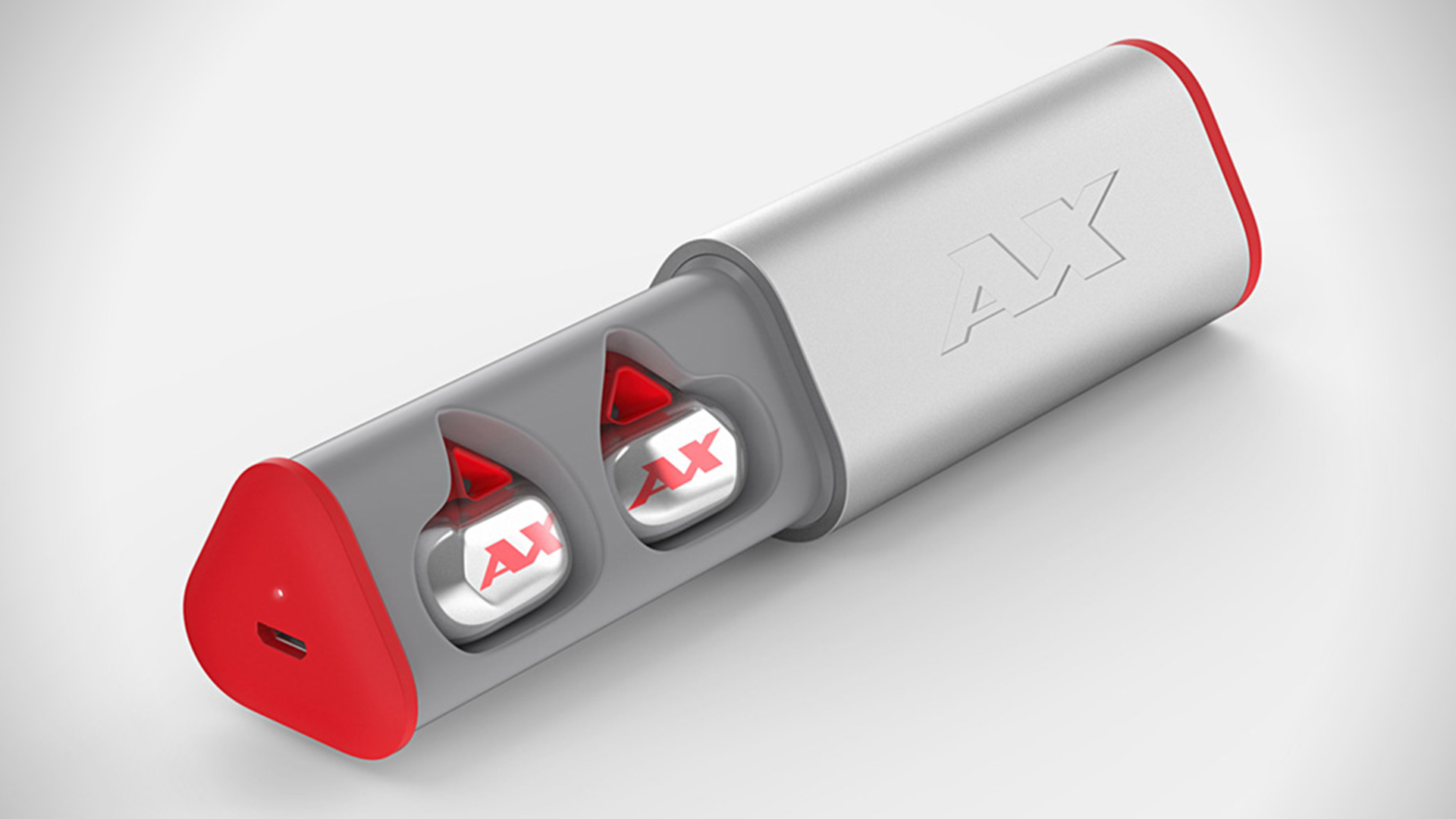
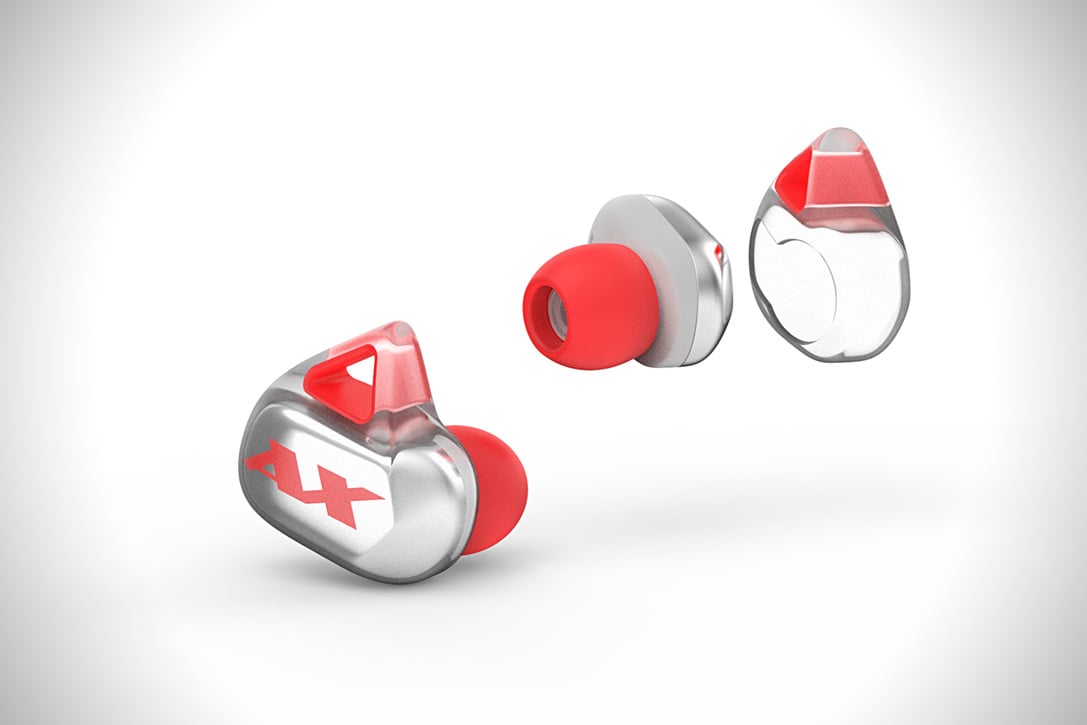
This article is the transcript of an interview with Igal Golva, CEO of Axum earphones, wireless earphones with secure fittings, designed for people doing exercise. A really interesting article about why these earphones are different to others on the market and what their plans are for the future of the company.

Mobile audio has always been a difficult balancing act. The need for great audio on the go has never been more prevalent. With smartphones now a staple for most people’s daily commute, exercise and fitness, the need for an audio solution that can be portable while still sounding good is the holy grail.

Apple, with the iPhone 7 has also forced people’s hands. The headphones they used to use are no longer as easy to pull out and plug in without the use of a dongle. This is where Bluetooth audio options come into play, and where the Axum wireless headphones are planning to make a splash. Currently on Indiegogo, the Axum are aiming to give people great audio, while ensuring they maintain that mobile, ultraportable feel. Currently at 528% funded, the Axum is proving to be a product many people want to get their hands on. We had a chance to talk to Igal Golvan, CEO at Axum, about what the headphones can do for audio and fitness and how they hope to change the way people view Bluetooth audio.

Axum: The Future of Wireless Audio 1

CGMagazine: Could you tell us a little about what Axum does and how these new headphones stand above the competition?

Igal Golvan: First of all, we not only offer four hours playtime (while others offer 1.5-2 hours) you can also get an additional four with the portable charging case. We achieved it by eliminating any unnecessary features. We are aiming to reach fitness junkies like us that need three things: fit, sound and battery life.

Our designers made a unique design that will fit you during the most extreme sport activities. In the last months all we did was test the earphones in every sport activity you can imagine .This included cycling, running, CrossFit , snowboarding and even sky diving .

The issue with True Wireless Earbuds is that all our competitors see this product as the latest technology in the headphones industry and as such they've aimed the technology at early adopters. Unlike them we understand the real potential of the product to become the mainstream earbuds of athletes, as the lack of cables is something so comfortable no one can even imagine, only when doing sport activities and listening to Axum earphones will you really understand the definition of freedom!

Axum: The Future of Wireless Audio 2

CGM: Could you go over what M-voiD® sound technology brings to the table?

IG: Sure. M-voiD stands for Multidisciplinary virtually optimized industrial Design. It’s a technology for the realistic simulation of audio systems using CAD data. It is a sophisticated technology that paves the way to reproduce outstanding sound performance to let consumers discover that earphones deliver the emotions and excitement comparable with a concert.

Realistic and predictive simulations by means of a fully coupled multiphysical electrical-mechanical-acoustical simulation model are the heart and driving backbone of M-voiD® technology. The major advantage of M-voiD® is that acoustic problems can be identified and resolved in the virtual domain before any prototype is being built.

Sound characteristics are virtually measurable and assessable and can be optimized on the virtual model. It is not just limited to the graphical reproduction. M-voiD® listens to the virtual sound of the earphone already on the computer by means of a special reproduction technique (called auralization), enabling improved sound. Bottom line, while even the largest companies out there can test 100 or maybe 10,000 prototypes to check and improve the sound quality before releasing the final product, we had the ability to test sound quality from over 10 million prototypes.

Besides that, Konzept-X also helped us with the driver design itself to maximize the results after we've changed the internal design.


Axum: The Future of Wireless Audio 3

CGM: With your Indigogo doing so well, do you foresee this will delay the final release?

IG: Exactly the opposite. We planned to wait until the funding period is over to head into mass production, but now that we understand the demand we'll start doing it ASAP.

CGM: Why the choice to go with Indigogo over an option such as Kickstarter?

IG: We thought about KS, however the Indiegogo team was much more supportive and offered lots of relevant information on how to succeed with crowdfunding . We are product people and don't understand crowdfunding, so a supportive team was something very important for us.

CGM: Do you plan to offer a retail version of these headphones?

IG: Of course, but first we'll ship everything to our backers and then we'll think about retail.

CGM: For the gamer on the go, will these offer anything beyond what is already in the wild?

IG: The perfect fit of Axum earbuds is something like you've never experienced before, you can see the bulky design of other brands such as Samsung and Motorola The last thing you want to do is wear those gigantic things all day long.

Axum: The Future of Wireless Audio 4

CGM: How do you think these headphones will do with the fitness crowd beyond just the music listener?

IG: We believe that beside the sound quality, the fit and comfort is something they'll be addicted to. We noticed the reaction of the people while testing them out in the gym and we guarantee that once you try Axum earbuds you'll never be able to use wires again!

CGM: Are there any obstacles you will need to overcome to bring these to market?

IG: Yes, there are many obstacles of unawareness from the customers. Many people are not familiar with this concept and think of it as a regular mono Bluetooth ear piece, so we are heading to a long journey of explaining our product and turning it into mainstream.

Axum: The Future of Wireless Audio 5

CGM: How do you feel these headphones will do with a crowded market? What sets Axum apart?

IG: We have full confidence in our product. First of all we know 100% that no matter how good your BT earbuds are, if they are not True Wireless they can't compete with us. As for other True Wireless companies out there, based on their design they've never thought about athletes as their potential customers and it's a shame as this concept is perfect for fitness and exercising. So we already have a huge advantage on them.

Friday, 17 February 2017

WiFi Enabled LTE Small Cell Gateway Market to Register a Strong Growth By 2021 - PMR

On paper, connecting walkie talkie radios to a Wifi networkis is the most obvious method of controlling and communicating within a business. But the reality is that there aren’t many radios on the market that have the capability to do this and many wifi networks aren’t robust enough to manage lots of radios, this article predicts that this technology will be a growth market, we will wait and see.

WiFi enabled LTE small cell gateway is a type of a base station. Base station uses cellular wireless network for communicating with mobile phones or terminals. Base station connects mobile phones to a wireless carrier network and offers local coverage for a wireless network. The area of coverage varies from several miles to few city blocks. Each base station is typically owned by one carrier or wireless company and gives coverage only for that company's network. It may also offer roaming coverage for other networks in case carriers have agreement for roaming and technology is compatible. Base station comprises of an electronic cabinet which connected by means of cables to a group of antennas. The antennas may be mounted on an existing structure or on dedicated tower structure including top of a building, church steeple or smoke-stack and water tower.


In radio communications, base station refers to wireless communications station implemented at a fixed location and used to communicate as wireless telephone system including cellular GSM or CDMA cell site, part push-to-talk two-way radio system, terrestrial trunked radio and two-way radio. A single location often operates several base stations owned by a different carrier. Smaller types of base stations or small cells include picocells, femtocells and microcells. WiFi enabled LTE small cell gateway is promising network element. A wide variety of base station deployments are in a small cell configuration. It has WiFi interface at end-use device and LTE interface at the carrier network.

Small cell is low-powered radio access nodes (operator-controlled) that operate in carrier-grade Wi-Fi (unlicensed) and licensed spectrum. Small cells normally have a range from 10 to numerous hundred meters. Small cell base stations are expected to play vital role in expanding the capacity of wireless networks due to increasing mobile data traffic. Mobile operators are increasingly looking forward to this technology in order to meet the rising demands for data, video and application access generated due to smart phones and other devices. Small cells aid mobile service that detect presence, interact wand connect with existing networks. Small cells offer increased quality of service and flexibility at an affordable cost. Small cell infrastructure implantation is an environmentally friendly approach as it reduces the number of cell towers and offers a cleaner signal using less power.

Rising numbers of wireless carriers or companies are taking dedicated interest in this industry owing to the proliferation of embedded WiFi features in fixed and mobile devices. Growing demand for more advanced handheld devices such as smart-phones and tablets is expected to create demand for technologies with high internet speed. This in turn, is expected to drive the growth of WiFi enabled LTE small cell gateways.

Friday, 3 February 2017

Virtual Reality Coming to Your In-Flight Entertainment?

2016 was the year of the Virtual reality headset, we are seeing the first versions of a technology that can, and possibly will, change our lives, much like the smart phone has. VR has the potential to improve our Games, TV programmes and Movies and allow us to experience things and places better. This article is about how your in-flight might be improved by a VR headsets.

No one likes flying during the holidays. Between having to leave two hours ahead of time and getting through security, just getting to your flight feels like a trip in itself. And then you get on the plane and have nothing to do for three hours except watch reruns of Friends on the little TV in front of you.

That’s probably about to change, thanks to VR. For a little while, of course, passengers can plug into their own Samsung Gear VR sets and tune out, but airlines might be offering their own complimentary variety so you can forget you’re stuck on an airplane.

A French start-up, SkyLights, is developing the tech. It’s a headset with a six-hour battery life, and it comes with noise-cancelling headphones. The headset looks pretty sleek and simple, because they’re made to be: There’s none of the neater interactions you get with an Oculus or Samsung headset. It really is just a movie beamed right into your face. You’ll be able to watch the newest 2D and 3D movies, and the set comes with 128 GB of storage â€" about 40 movies. Weighing only slightly more than half a pound, it’s easy to visualize the headset propped on the back of the seat in front of you, and after paying the fee, you can flip it on and enjoy hi-def movies right in front of your face.

The headsets are being tested in France right now: XL Airways became the first headset to offer a commercial version of the headset to passengers last week, for $16 per flight. SkyLights has also partnered with AirFrance and Airbus. Content-wise, there are partnerships in the works with 20th Century Fox and Dreamworks.


The general lack of viable in-flight entertainment has been plaguing the airline industry for a while; broadband Internet is an extra cost (roughly $10 per flight, depending on your airline), and the movies and TV they show are typically outdated.

It wasn’t until recently that airlines began attempting to match the broadband speed you’d find on the ground. (As of last year, you’d get speeds of around 3.1Mbps, as opposed to the roughly 30Mbps that smartphones on the ground are capable of). Since so many people use their own devices for entertainment, airlines are in desperate need of upping their Wi-Fi speed. But they also need ways to entertain their customers in an inexpensive manner, without the heavy screens and cables that come with TVs. Virtual-reality headsets â€" light, not-too-costly, and wireless â€" could offer a way for airlines to draw their customer base back in. But there are challenges: VR headsets are a relatively new and untested technology.

“Airlines are difficult players to deal with because they are risk-averse and slow to innovate,” David Dicko, SkyLight’s CEO, told the Times.

One potential problem for in-flight VR in your face is the nausea it causes. VR (even if it’s just a film) can be very disorienting, and it’s not hard to imagine people getting sick from it on a moving plane. Oculus’ health and safety documentation is a laundry list of potential concerns, from warnings of dizziness and nausea to seizures and sweating.

Another potential issue could be that hundreds of folks tuned out to a VR movie with noise-cancelling headphones have, at the least, limited awareness of the outside world. That means slowness to react in plane emergencies â€" another potential lawsuit on an airline’s hands.

For now, we’re skeptical that VR headsets will take off as in-flight entertainment in the U.S. anytime soon. Early adopters might be eager to try them â€" but they also have their own headsets that they can use for free. Customers would have to pay over the price of a movie ticket, the technology is unstudied when it comes to users’ health, and everyone has their own phone or tablet to entertain themselves. We love the idea, but, as Dicko noted, the airlines are a pretty risk-averse industry. They should prioritize Wi-Fi bandwidth first (and make it at least cheaper), which is what the majority of customers undoubtedly want.

Anyway, it’s hard to imagine a more Black Mirrorâ€"esque image than a hundred people, arranged into rows, their heads leaning back, eyes hidden behind a headset, plugged in to a world that isn’t there.

Sunday, 29 January 2017

What exactly is a walkie talkie headset

A Walkie Talkie is a handheld receiver or portable radio. Walkie talkies come in a pair and they communicate quietly with one another using radio waves, on a single shared frequency band.

Almost all of us grew up with walkie talkies. As children, and especially before the age of mobile phones and technology, we all had a pair and played with them in our gardens.

Walkie talkies have made a comeback. Or maybe they never really went out of style but now they’re sophisticated.

Each unit is battery powered and has an antenna for sending and receiving radio wave message. There is a transmitter / receiver and a loudspeaker. The loudspeaker doubles up as a microphone. There is a button that you push to talk, pretty much the same way that an intercom works. Some more sophisticated walkie talkies have separate loudspeakers and microphones; it just depends on what you need the walkie talkie for.

Walkie Talkies with noise cancelling headsets

Technology has changed so much and become so much more sophisticated. In the old days, think of the crackles that came with walkie talkies. It was often very difficult to hear what the other person was saying. But a pair of noise cancelling walkie talkie headsets will reduce or remove any unwanted sounds by using active noise control. Note that this is very different from passive headphones which use technique such as soundproofing. Noise cancelling is not soundproofing.

Our worlds are busy and we become bombarded and overwhelmed by everything around us. We need to listen to some things, but we want to cut out others. Noise Cancelling allows us to do this, while still allowing us to listen to the things we want to listen to at the volume we want them.

Pros of a walkie talkie headset?

Remember when we used to listen to music really loud so we could block out all the other external noise? You don't need to do this anymore. walkie talkie headsets will block out most excess or excessive sound, or the ones you want blocked out anyway. You can now listen to your music at the volume you want, which does not need to be crazy, and the other external sounds (baby crying, man snoring next to you) will be blocked out anyway. Finally, you can listen to and enjoy music in the way you want to enjoy it, at a natural volume. You can hear the fabulous music, have a rich listening experience, and still not be disturbed by chatter around you.

Noise cancelling headphones are fabulous for when you travel or commute. You may be the kind of person who gets on a plane and train and chats to everyone around you. But you may be more solitary and want to sit down and zone out. You can do this easily with a walkie talkie headset. The beauty is that on a plane you won’t hear the noise of the aircraft or its passengers, but you will still hear the safety announcements.

It’s really easy to work in a noisy environment with noise cancelling headphones. You can focus easily without being disturbed and can make use of any space, productively. You can even go and study your history while at a party or in a restaurant. It is also a good idea to use them at home, while studying for exams or so; they cut out the excess noise and you can focus totally on your work.

Students used to turn up the volume of their earphones in order to cut out the outside world’. But with a walkie talkie headset they are finding it is easier to study when music is at a lower volume and when the outside distractions have been eliminated.

Cons to noise cancelling headphones?

There are always cons to everything. Some parents may say they would prefer no headphones at all. They like their children to be available and to engage more and talk more, but we know this is the way of the world. Everyone uses headphones; parents included/ Use them in moderation of course, but still be sociable and take time out in the day, be headphone free, and engage.

Noise cancelling headphones are not very cheap and are in fact possibly even ten times more expensive than ordinary headphones. However, like anything that costs money, they will last for a long time and are super reliable. They may cost more money but will ultimately give a much better noise-free experience.

Lots of research has gone into the design of these special noise cancelling headphones. Each set consists of inner components that cancel out the disturbing external sounds. Ordinary headphones do not have these components, i.e., you cannot cut out the outside sounds. It is quite obvious then, why noise cancelling headphones are more expensive.

These internal components also use up a lot of power. The power can come from internal replaceable batteries or they can be rechargeable. The walkie talkie headset that carry their own power supply means they are heavier than ordinary headphones. Not all sets carry their own power supply. The ones that are rechargeable are lighter, but they can drain the devices they need to plug into for power.

The quality of sound when using a noise cancelling walkie talkie headset can be compromised. It is unusual though and it is only the most sensitive of ears that would pick this up. There have been very few complaints of a tinny almost mechanical sound, but these complaints are few and far between.

Not all sounds are blocked out by a walkie talkie headset, although we did mention this under pros as well. It is never possible to cancel out all external sounds, but we still need to be able to hear police sirens, pilot announcements or the high pitched screaming of your next door neighbor. All every day external sounds though are muffled and definitely much quieter, and the sounds that you don't need to hear, are gone.

Tuesday, 17 January 2017

Could hearing loss be a hidden cost of gaming?

Is this is a real problem? Do you use a set of headphones whilst gaming? This article has information on how damaging wearing gaming headphones is and what the future impact might be. Read this, examine how you use your headphones and get on with life…


According to the Q1 2016 GameTrack report, 18.8 million people between the ages of 6 and 64 game and those between 11 and 64 spend an average 8.8 hours per week doing so.

 Amongst Gamers the largest group is 15 to 24 year old males who are most at risk of permanently damaging their hearing. This group spends the most amount of time gaming and are also the most attracted to the “loud” games. Furthermore a majority of them live in a shared accommodation and use headphones so as not to disturb others. This group also the most likely to take part in other activities which can be harmful to their hearing such as listening to music through headphones, going to gigs and festivals, and nightclubs.

 Unfortunately the price of their enjoyment could well be significant and permanent hearing damage. Whilst there is clearly a risk to the Gamer, it could transfer as a liability to the games companies in the form of legal action relating to their duty of care.

 The first significant step is to make Gamers aware of how much sound exposure they are experiencing and what they can do to prevent hearing damage, because hearing damage is permanent

 Hearing damage is caused by the combination of how long you listen (time), how loud you listen (volume), and what you listen to (energy content). The combination of these three factors create a “sound dose”, if the dose is too high it starts to damage your hearing.

 The UN’s World Health Organisation and hearing conservation organisations are increasing awareness of the risks and advise users to restrict their daily sound dose to less than 85dB average over 8 hours.

 Gamers who use headphones currently have no realistic way to indicate what level they are listening at and how much of their daily sound dose they have used. The answer will be to provide them with an intelligent sound dose measurement app or software, giving them their individual sound dose exposure information and guidance, with optional protection, so that for the first time they can make informed decisions about their hearing health.

Tuesday, 27 December 2016

Offering workers hearing protection options

Much Like Protecting your sight or looking after your health, your hearing should also be protected, this article tackles hearing protection within the workplace and what type of earplugs are best, Enjoy.

OSHA regulations dictate we offer a “variety” of hearing protectors to noise-exposed workers. What is best practice for providing a variety while keeping inventory to a minimum?

Per CFR 1910.95(i)(3), “Employees shall be given the opportunity to select their hearing protectors from a variety of suitable hearing protectors provided by the employer.” But does “variety of suitable hearing protectors” mean two or 10, earplugs or earmuffs, different colors or different sizes?

The wrong approach is to choose a variety based on factors that have no effect on protecting hearing, including the published noise reduction rating. Some safety managers offer several different large foam earplugs that are yellow, green and orange â€" mistakenly assuming they meet the “variety” requirement and not realizing that a significant portion of their workforce will never achieve an adequate fit with a large foam earplug. In those cases, their supposed “variety” actually limits the number of workers adequately protected.

This bad assumption is often codified into company safety policies that require a minimum NRR: “Approved hearing protectors must have an NRR of at least 32 decibels,” or similar criteria. By definition, that typically means a large foam earplug. Despite the higher NRR based on 10 laboratory test subjects, workers with smaller ear canals will never achieve an adequate fit with those large foam earplugs to stop noise-induced hearing loss.


What are the factors that affect good fit of an earplug?


  • Size: Like a cork in a bottle, an earplug that is too large or too small will never achieve an acoustic seal to protect hearing. Offering a variety of sizes significantly improves the percentage of employees obtaining a good fit.


  • Shape: Ear canal openings may appear round, oval or slit. A foam earplug often fills an oval or slit opening better than pre-molded earplugs.


  • Ease of insertion: Some workers have difficulty rolling or inserting foam earplugs due to lack of mobility. For these workers, an earplug with a stem may be easier to insert.


Based on thousands of fit tests administered to workers in the field, the following four earplug styles provide a selection that would adequately protect nearly every worker:


  • Large foam earplug


  • Smaller foam earplug


  • Large reusable earplug


  • Smaller reusable earplug


The good news is that offering a variety does not necessarily increase cost. Buying 1,000 earplugs of one style or 250 earplugs of four different styles is fairly equivalent in cost. But the bigger variety significantly increases the probability that more workers will be adequately protected.

Many worksites adjust their inventory based on results of their fit-testing of hearing protectors. By reviewing which earplugs repeatedly provide the best fit, these companies identify the gaps or duplications in their offering and can adjust accordingly. Sometimes, this means adding a smaller-size earplug, but many times companies find they can remove some less-effective earplugs from their inventory. It’s not necessary to carry a dozen different earplug styles.

Finally, any offering of hearing protection needs a hands-on training component. How can a workers determine whether their ear canal is large or small, round or oval? It’s impossible to view your own ear canal opening in a mirror. A quick glance by a safety trainer can be of tremendous benefit in helping workers select the right earplug the first time.

Sunday, 18 December 2016

Those New Tracks You’re Listening to Are About to Sound Much Better

SO you’re walking down the street and suddenly the music kicks in, you drop to the ground and pull your earphones out of your ears! “what just happened” you think, then you realise the un-pause on the mp3 has just kicked in and you forgot to turn it down. Well people this will be a problem of the past with these earphones, Now all I need them to do is make coffee. VERY IMPORTAN You can find the original article here

What’s been your favorite set this weekend? Or the best new track you’ve shared with all of your friends? Well take that track and imagine listening to it in exactly the way your ears want you to.

Meet the Even earphones, who tune themselves to each person’s particular hearing. At just under $100, they customize the sounds they play to suit your own audio needs. They use their own EarPrint technology that measures how you hear different frequencies, then sets the earphones to play back sound specifically for each ear. As a result, the headphones give you a profile tuned to your own ear (each ear with its own profile).


One of the biggest things that originally drew me to the earphones was the fact that they are not a pre-order campaign â€" they have physical earbuds available now. The company, who launched in in June, has sold out batches twice thus far and are continuing to take orders on their website. Luckily, I was able to get my hands on a pair to try out as well.

I’m pretty picky about the gadgets I use for audio, as I’m constantly listening to music â€" digging for new sets on Soundcloud, reviewing new tracks, jamming out in my own world. Being able to plug in and listen to my own music is what allows me to focus and, as a result, I’m very specific about the type of earphones or headphones I use. That being said, I was overly ecstatic when I was handed a pair of Even earphones to try out.

First, their appearance: the cords are a high-quality string that have a smooth look and feel. The buds look sleek, with a simple black-and-white color scheme â€" one black, one white, with the EarPrint device hanging at the middle of the cord, meant to dangle at your chest. They don’t tangle easily, which makes them easier to carry without having to worry about dealing with knots. They’re the type of earphones I wouldn’t mind wearing out in public.


Next: the sound test. This is where we meet “Sarah,” the soothing female voice that guides you through a number of sounds to test where your hearing level is at. This test was very straightforward â€" Sarah literally starts by saying “Hi, this is really easy” â€" and felt very conversational as she talked you through each noise. Five pieces of music are played for each ear, and you’re required to hit the button once you hear the sound. Though the process takes a little bit longer than I’d like, it’s seamless.

Overall quality of the listening experience was great. I switched between my Bose over-ear headphones and the Even earphones to test the difference in sound quality and worked to try a few subgenres of electronic music to see how each would sound between both pairs. I started off by listening to Louis The Child’s set from Lollapalooza this year and instantly found that the vocals were much more emphasized than in my Bose headphones. Next, I moved on to Mikey Lion’s live set from Desert Hearts 2016 and loved the emphasis on the bass I was hearing â€" the Even earphones made it much more of an all-around experience. I then switched over to Troyboi’s tracks Do You? and O.G. to continue to test this bass theory and, again, Even delivered.

As my hearing is likely damaged based on the amount of festivals and shows I’ve attended over my lifetime, it was much appreciated that the earphones were able to pick up on the frequencies I have more trouble hearing to create the full experience tracks deserve. Interestingly enough, every time I switched back to my Bose headphones to compare, I had to turn the volume down because it came at full blast and was overwhelming â€" and, when I did, the clarity between vocals and bass was lost. All in all, these babies pack a punch with their sound quality when it comes to electronic music.

It’s refreshing that these earphones don’t require using an app, since that seems so commonplace nowadays. All of the information that goes into your profile is saved in the little box hanging onto the string, so you can plug them into any device â€" phone, laptop, iPod, whatever you want â€" and still have your own profile saved. I found this extremely helpful, as it meant that I don’t have to re-adjust my volume based on what device I’m using. Beyond that, it’s a refreshing change from listening to sets with friends and having to change the volume based on everyone’s sensitivities. It makes listening much simpler and, quite frankly, electronic music better. How could you say no to a custom-made, surround-sound system in your own ears?

To get you started, here a few sets, old and new, you may enjoy listening to in the earphones (ok, to be fair, these are sets that I would want to hear in them):


Wednesday, 14 December 2016

Motorola Solutions’ digital two-way radio technology enhances mission-critical communications at Munich airport

Motorola solutions are a company well known for their robust two way radios and for building world class communication structures. Improving on the current TETRA system with an IP dispatch console and piloting the WAVE system, that allows a phone app to connect to the radio system, for communicating of site. You can read more about what Motorola are doing for Munich below and you can find the original article here.

Motorola Solutions has received an order to implement a comprehensive update and extension of its existing TETRA digital two-way radio system at Munich Airport.

The newly modernized communications infrastructure ensures greater connectivity, interoperability and collaboration between various business and operational functions at Germany’s second largest airport. Motorola Solutions will also provide services for ensuring smooth operations.


Within the framework of the TETRA radio network refresh, Motorola Solutions is equipping the airport with a new MCC 7500 IP Dispatch Console. The comprehensive, scalable solution enhances the IP architecture to ensure optimum call set up and availability. It will also allow Munich Airport to expand its communications infrastructure in the future without interrupting existing services. As well as this, Motorola Solutions will implement two TETRA base stations for improved TETRA radio coverage in the terminal buildings.

Alongside the improvements to the TETRA system, the airport has started a pilot project for the potential introduction of Motorola Solutions’ broadband push-to-talk (PTT) platform WAVE. The goal of the installation is to ensure that airport staff can communicate, no matter which device or infrastructure is being used. The powerful PTT solution WAVEâ„¢ Work Group Communications provides airport authorities with secure and reliable communications beyond TETRA radio â€" including broadband devices and networks â€" to enable greater workforce connectivity, interoperability and collaboration. WAVE connects the TETRA system used by administrative staff with service management employees who join the broadband platform via smartphones, computers, other radios or telephones, meaning that staff across the airport can communicate with one another from virtually any location.

“We have been working with Motorola Solutions’ TETRA two-way digital radio system since 2007,” said Michael Zaddach, head of the IT service division at Flughafen München GmbH. “The update of our TETRA infrastructure enables us to further improve our communications in airport operations and make our processes even more efficient.”

“We are collaborating closely with Munich Airport to provide a future-proof TETRA digital two-way radio network,” said Klaus-Dieter Drossel, sales director for key accounts, Motorola Solutions Germany GmbH. “We are also pleased that Munich Airport is testing our broadband push-to-talk platform WAVE, and we are certain that it will enable airport staff to work together more closely, no matter which device or network they use.”

Saturday, 3 December 2016

Exactly what does earpiece mean

Almost all adults have used an earpiece at some point in their lives. An earpiece is actually a gadget placed on the ear and is usually used for listening to something. Millions of people normally use an earpiece for different reasons. In this article, we are going to explain in details different uses of an earpiece.

The first very common use of an ear piece is connection to a wireless radio. Wireless radios usually consist of earpiece cable that usually connects the radio to the user. This is very common especially in sports such as cricket where people usually follow the game from the radio. The earpiece is usually plugged either on a single ear or both ears.

Stethoscope is a type of earpiece that is mostly used by medical practitioners. This earpiece is a bit different from the normal ones and it needs to be carefully inserted into the ears so as to provide an excellent acoustic seal as well as make the user comfortable. This type of earpiece usually snaps firmly to the ends of the ear tube and requires special skills in order to safely remove them after use.


An Earpiece is also used as a hearing aid. This type of earpiece is either made from plastic that has been well molded to fit the exact shape of your ear or with a thin plastic dome known as open fitting that is usually fitted inside the ear. This type of earpiece is available in different categories and its suitability usually depends on the user degree of hearing loss. It has a microphone that fits behind the ear as well as an earpiece that perfectly fits on the ear. Custom made earpiece usually differs slightly from the normal earpiece in that it is usually made from a clear plastic known as NHS behind the ear hearing aids.

Did you know that an earpiece is usually used on 2 way radio? The radio earpiece is available in variety of styles. Some of the styles include D-ring, clear tube and over the ear. Earpieces for two way radios are usually used on many different radio brands including Kenwood, Motorola, Icom and Binatone. In addition to that, it is also used by bar staff, door supervisors and security staff.

Most people usually wonder how TV presenters communicate with the producers. Typically Presenters use an earpiece to receive instructions or information from the director. They can also receive messages from a device that plays a recorded script. A Presenter earpiece is available in two categories: wireless ear bug or tube earpiece. These types are usually very small and cannot be seen unless you look keenly for them. They are used by all type of presenters either in studio or out in the field as well as those in live broadcast and entertainment field.

Thousands of people use earpieces to listen to music on their phone IPod and mp3 players, They are also used to communicate on the phone. Typically, an earpiece usually fits both ears and the style that is commonly used is white. They are also used by sound engineers, musicians, audiophiles to listen to their own vocals, music, and stage instrumentation during live performance or when recording studio mixing. In most cases, the earpieces are usually customized to provide comfort and noise reduction from the surrounding to the user.

So the big question is, what is the difference between an earphone and an earpiece? The main differences between these two devices are; an earpiece a speaker is near or inside the ear while the earphone is a traducer that converts electric signals to sound and it is usually held near the ear. An earpiece has both its pros and cons. Some of the benefits of the earpiece include being lightweight and portable. It is also small in size and cannot be seen easily. Common disadvantages associated with earpieces include not being able to filter external noise properly and having problems receiving sound from them especially if there is a lot if background noise.

Tuesday, 15 November 2016

Spy Earpiece: A Micro Earpiece That Will Help You Through Presentations, Interviews, Speeches + More

When you think of a spy earpiece, the first thing that comes to mind is inspector gadget or Mission impossible, well it does for us anyway. But there are real world applications for these earpieces are wide. As this article explains, when you need a little help with prompts on a big presentation or you need to receive instructions during a lecture, then a micro earpiece could be the answer.

This device originally developed for covert operations is now made available for the public to use. Each earpiece kit can provide a way for you to transmit and receive audio information without anybody in the room knowing. Whether you want to receive pre-recorded messages or information from another party to assist you during your presentation / interview or speech, the earpiece can be set up with your phone, audio recorder, radio, or MP3 player to send the message to your earpiece , placed in your ear channel so that it is undetectable .. All kits also include a built in microphone so that you can engage in 2 way conversation should you wish


So how does it work?

The key is the inductive transmitter that will transmit audio from a phone / mp3 player to the earpiece. The transmitter itself is available in many forms. For example the transmitter may be included within a neckloop to be worn around the users neck, this may connect to your phone or mp3 player via its earphone socket. Or you may have a Bluetooth are often included in everyday objects such as a pair of glasses, a Pen or even a bluetooth watch. The transmitter acts as the aerial for reception and signal transmitter from phone to earpiece. At the same time, output sound picked up by the tiny microphone attached to the neckloop / pen / glasses is sent through your phone just as if the user is talking directly into it.

How to Use The Spy Earpiece?

Depending on what kind of information you wish to receive the earpiece can be set up to suit. For example during a presentation or speech you may wish to pre-record your speech or presentation on an mp3 player, then play it back to yourself during the presentation / speech. Or simply record a simple prompt for each point you would like to make. You could then connect up your mp3 player to an inductive neckloop included in most earpiece kits, and wear a spy earpiece. So long as the battery is inserted into the earpiece you will hear the audio from your mp3 player in the earpiece.

Alternatively you may prefer to have a team prepped in another room to assist you during your speech. This can be achieved by simply starting a mobile phone conversation with your team just before the speech starts. You would then need to either connect an inductive neckloop to the headphone output of your phone, or pair your phone with a bluetooth induction neckloop / pen / glasses. Insert the earpiece into your ear making sure the battery is inserted correctly. Your team should be able to hear your speech in real time over the phone, and can give you tips in your earpiece along the way. The same may apply in an interview situation, you may wish to have a third party issue you advice during your interview.

Each Inductive transmitter whether it be a neckloop or a bluetooth device like a pen, glasses or bluetooth neckloop, will also include a built in microphone so you can also talk back to your colleagues should you wish during your speech / presentation or interview.


Lets not forget the original intention of the Spy Earpiece which is for security and covert surveillance. The Spy Earpiece excels in these situations where the requirement is for a security operative to communicate covertly.

The key to success is in the careful planning and preparation so that everything runs smooth.

The way I see it, when the challenge is great and the results mean everything, why not try the Spy Earpiece and take the risk out of the equation?


Source - https://techfeatured.com/1592/spy-earpiece-a-micro-earpiece-that-will-help-you-through-presentations-interviews-speeches-more

Saturday, 29 October 2016

5 Reasons The FBI Hate To Use a Radio Earpiece

When you think of the US Secret Service agents, the image that comes to mind is that of a person in dark sunglasses, black suit, and a coiled tube thing goes into his ear. The coiled tube thing is what the agents use to monitor and communicate what's going around them, where dangers lurk and where they're are needed. Unfortunately, the coiled tube thing tends to be very noticeable such that the bad guys will easily identify the secret service agents. Over the past couple of years, various earpiece companies have closely worked with the US secret service, and have supplied the agents with quality covert tactical earpieces. The covert tactical earpieces are much better than the traditional coiled tube earpieces because of a number of reasons. Some of the reasons include;

1. Discreetness/Covertness

Security professionals typically chose earpieces based on just how discrete/covert they want to be. The level of covertness or discreetness is usually determined by the type of earpiece, earpiece style, and also the color. As aforementioned, if you want to identify a secret service agent you can simply look for the guy with a coiled tube type of earpiece. Luckily for secret service agents, various earpiece companies now offer earpieces which allow the secret service agents to efficiently communicate in a more covert and discreet manner without anybody noticing. They allow for discreet communication between the agent and his or her team.

In-ear earpieces are typically more discreet because they're worn inside of the the ear as compared to the over-the-ear earpieces which are worn outside of the ear. It is also wiser to opt for colourless earpieces as opposed to the coloured earpieces for extra covertness. You can also opt for the wireless earpieces; the wireless earpieces are usually preferred over the wired earpieces since it is hard to tell that somebody is actually wearing the wireless earpiece as compared to the coiled tube, wired earpieces. The wireless earpieces normally receive the signals wireless. One needs to have a separate microphone worn at the end of the sleeve, or even on a lapel. In order to send a message to the other(s), the wearer has to speak into that microphone, and the other(s) will receive the message via their wireless earpieces.

2. Comfort

You should obviously choose an earpiece which is comfortable to wear; Some of the crucial questions to ask prior to choosing an earpiece can include; how easy that earpiece is to not only wear, but also to remove, how easy is it to control and use the earpiece, and also whether the earpiece will be able to remain intact for as long as needed without falling off. One of the main reasons why most people dislike the coiled tube earpieces, is the lack of comfort. Most agents say that the coiled tube earpieces cause a lot of ear fatigue. Most of the secret service agents are usually connected to the radio 12 to 16 hours per day, and some agents will have the earpieces draped over their ears and hanging out, with the volume of their radio turned way up so they do not have to have to plug the coiled tube earpiece in their ears all day long. . Fortunately, the covert/discreet earpieces are very comfortable to wear. They use speakers which are smaller than the average ear canal; this means that there's very little contact, thus are ideal for secret service agents who want to avoid the feeling of ear fatigue.

3. Sound quality

Secret service agents are dealt with protecting the President and as such, it is crucial to get everything right, including the message being sent to their earpiece. In case of a sensitive situation, it is even more crucial to get the message right or correctly. Listening to sounds which are being pushed up a coiled tube may leave a margin for error. The tactical earpieces have the speakers placed in the canal of the ear which means that the sound is basically created there, (approximately 7millimeters from the eardrum), and is worn in both of the ears. This allows the wearer to clearly listen to what's being transmitted through the earpiece, meaning they will be more efficient in their work.

4. Volume

This is one of the main reasons why secret service agents dislike their coiled tube earpieces. Many of the secret service agents say that they usually feel like they are gradually incurring hearing loss especially in the ear which they plug the radio earpiece. Well, with the covert earpieces , the ear isn't plugged so that the sound pressure can get released. And since it's worn in both of the ears, and the speakers are located in the ear, the radio may be turned down, and you will have much better sound clarity. This allows agents to work more efficiently, and in addition, they will have no fear of incurring hearing loss.

5. Localization

The brain is typically wired to locate where sounds/noises originate from, or rather the brain is wired to localize. When you hear a sound from the right side, you will know it since it enters your right ear a little louder and a little quicker, and your brain registers that the sound came from the right direction. This means that a secret service agent, or anybody wearing the coiled tube type of earpiece in their right ear, might hear a similar sound a little louder in their left ear since their right ear is plugged. In sensitive situations, mistaking the location of the sound can be disastrous since it could leave time for bad guys to get away, attack, or complete their objective. The tactical earpieces are designed such that they help the secret service agents to accurately locate the actual place the sound is originating from.

Conclusion


The covert earpieces address all negative issues which anybody who wears or uses the coiled tube type of earpiece experiences. They're comfortable, discreet, they use top notch, high end, high quality speakers which offer the best clarity, they help in reducing the risk of future hearing loss since one can reduce/adjust the radio volume, and they also allow wearers to accurately and quickly localize the direction a sound is coming from.

Friday, 21 October 2016

Ericsson first to deliver 5G NR radio

We are seeing a new era in communications at the moment, the move from tetra and RF to the mobile network. The uk’s emergency services will be moved over to EE’s ESN system slowly until 2020 using Motorola kit designed particularly for the technology. The natural evolution is 5G, which we won’t see for many years, but Ericsson have taken the baton and are running with it.


  • World's first commercial 5G New Radio (NR) radio for massive MIMO and Multi-user MIMO coming in 2017


  • New additions to Ericsson Radio System address key requirements of 5G, in today's networks


  • Pioneering Industrialized Network Rollout Services solution facilitates complete rollout from configuration to verification in a single visit


Ericsson (NASDAQ:ERIC) is commercializing the world's first 5G NR radio for massive MIMO, with the first deployments coming in 2017. Together with the Ericsson 5G Plug-Ins announced in June and Ericsson's already commercially available Radio System Baseband 5216, which currently powers Ericsson's award-winning Radio Test Bed, Ericsson is first to deliver all components of a 5G access network.

Tom Keathley, senior vice president, Wireless Network Architecture and Design, AT&T, says: "As we accelerate toward 5G, it's beneficial to have a flexible radio platform that can be deployed not only for LTE, but also versions of future 5G NR standards."

AIR 6468 combines advanced antennas with a large number of steerable ports to enable 5G technologies of beamforming, Massive MIMO and -- building on that -- Multi-user MIMO, initialized as MU-MIMO. These capabilities improve user experience while enhancing the capacity and coverage of the network and reducing interference. The new radio provides LTE support as well, so it is applicable in today's networks.


Huang Yuhong, Deputy Head, China Mobile Research Institute (CMRI), says: "Massive-MIMO, also known as 3D MIMO, is an important milestone in China Mobile's technology roadmap from 4G to 5G. We are very happy that Ericsson's new radio product is coming to market soon to meet our needs and enable us to integrate 5G technologies into our existing networks."

A host of new additions to the Ericsson Radio System are also coming that address key 5G requirements, in today's networks.

Daniel Staub, Head of Joint Mobile Group, Swisscom, says: "On the road to 5G, we will continue to invest in LTE advancements that will become part of our 5G networks. For us, it is key that Ericsson has chosen to focus on advances that will support us in this evolution. These enhancements will further improve the customer experience."

Additional new Ericsson Radio System gear addresses 5G concepts


  • Three new radios support Gigabit speeds for LTE and provide further flexibility in design: Radio 4407 and Radio 4412 enable 4x4 MIMO in one radio unit for FDD and TDD mode respectively, and Radio 8808 for advanced TDD beamforming applications


  • Addressing both the need for unlicensed spectrum options and the growing emphasis on small cells is the Radio 2205, a micro solution on unlicensed spectrum that is fully integrated in Ericsson Radio System, using the same baseband and network management


  • Two new baseband units support the growing need for densification: the outdoor micro Baseband 6502 and macro Baseband 6303 with Ericsson Rail System mounting for flexible site builds


  • Addressing interference issues in dense builds, Baseband P614 enables new band activation on challenging sites by mitigating Passive Inter Modulation, referred to as PIM mitigation, from static and dynamic sources both inside and outside the antenna system


  • Spectrum optimization is a growing need and Uplink Spectrum Analyzer is an Ericsson-unique software solution to remotely identify external interference without the need for costly measurement equipment and site visits


  • Exclusive to Ericsson is instant power sharing, used in the wideband Radio 2242. This capability allows power to be instantly shared between carriers, standards and bands, optimizing the use of radio resources


  • Cloud RAN will be an important 5G network architecture and Baseband C608 provides high-performance switching in Elastic RAN deployments


Peter Jarich, Vice President, Consumer and Infrastructure Services, Current Analysis, says: "Mobile operators, today, are clearly focused on the race to 5G commercialization, while also continuing to invest in their existing LTE networks. With a new 5G radio and LTE offerings which echo key 5G concepts - small cells, licensed-unlicensed band combinations, Cloud RAN, network densification, spectrum optimization - Ericsson's new portfolio additions and Ericsson Radio System innovations provide a compelling way forward."

To support new network builds, Ericsson has created the industry's first Industrialized Network Rollout Services solution. The Network Deployment Delivery Platform coupled with Ericsson's pioneering process facilitates the complete configuration, installation, integration, shakedown and handover of a fully verified site, ready in a single site visit.

Arun Bansal, Head of Business Unit Network Products, Ericsson, says: "Ericsson has driven innovation in every generation of mobile technology and now we are set to over-deliver on an aggressive promise. We are introducing the new hardware that 5G Plug-Ins, announced in June, will run on, so that the first operators can start to deploy 5G infrastructure.  And, we are also launching innovations that improve both the performance and efficiency of today's networks using concepts that will evolve into 5G."

We found this news story on the Communication news website

Monday, 19 September 2016

Motorola Solutions announces new mobile radio, enhancements to its P25 platform

Motorola Solutions are busy re-modelling their business at the moment and are under pressure from many other radio manufacturers, that are stealing away their market share. They are moving towards creating equipment that can use the LTE, essentially competing with the mobile phone market. This will be seen by many as a move away from the essence of two way radios, but it is an inevitable progression. This new radio will use current motorola earpieces, chargers and batteries. We brought you this article from the urgentcomms websites

Motorola Solutions today will unveil a new P25 mobile radio that operates on its ASTRO 25 systems and will highlight key features enabled by the 7.17 release of ASTRO 25 software today at APCO 2016.


One of the key features of the APX 8500 all-band mobile radio is its ability to leverage LTE connectivity from a VML750 modem installed in the public-safety vehicle, if the ASTRO 25 data capability is interrupted by continuous voice transmissions during a busy incident, according to Anatoly Delm, Motorola Solutions’ director of global infrastructure marketing.

“Let’s say that you have a major incident, everybody’s talking all the time and the ASTRO network is being used all the time, it can [offload] some of the data communications, like GPS, to broadbandâ€"public-safety LTE or commercial LTE, depending on what the modem is operating on,” Delm said during an interview with IWCE’s Urgent Communications.

“So, you’ve got this combination of the best of both worlds, where your voice communications are continuing over the ASTRO network, and your data communicationsâ€"if the ASTRO network is too busy, because of a major incidentâ€"can be carried on by an LTE network from the same car.”

Meanwhile, the 7.17 release of ASTRO 25 software will provide system users and operators with features that are designed to improve the reliability and usability of the P25 network, Delm said.

One enhancement is a more efficient way to execute over-the-air software updates, Delm said.

“Ordinarily, what happens is that the software update has to travel to one radio at a time. If you’ve got a large enough fleet, it could take days or possibly weeks [to complete the software update for all radios],” he said. “In this case, the software is being continuously broadcast, kind of like on repeat. In the meantime, all of the radios continue to function as normalâ€"you can talk on them, and none of the functions are disrupted.

“Once a radio has received all of the packets that it needs, it can then give the user the [a notification] that the update is ready and asks whether the user wants to install it. If they say ‘Yes,’ then the radio is updated. This means you can reduce your update time to maybe a few hours, depending on the size of your fleet. But you certainly don’t have to do it one at a time.”

Other new capabilities included in the latest ASTRO 25 software release include personnel accountabilityâ€"often used for roll-call functionality on a fireground or other incident sceneâ€"over trunked systems, Delm said. Previously, this capability existed only in conventional mode.